Tuesday, August 14, 2012

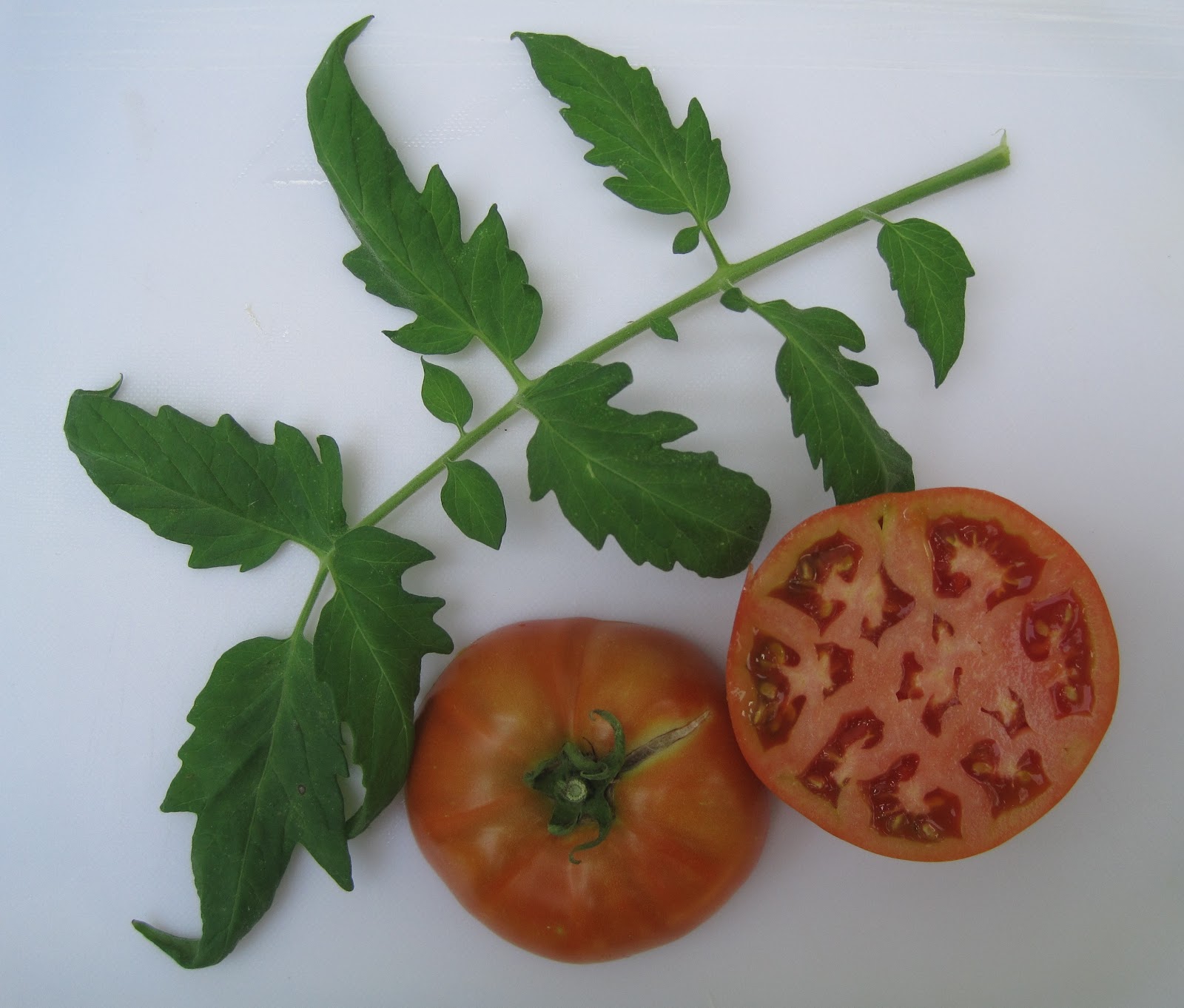
Tanggula


   From the Philippines by way of Canada. Documentation suggests it is a stabilized cross between Earliana and Harrow from around 1960. Medium sized plants with medium to heavy fruitset of orange-red beefsteaks that resist cracking and blemishes yet still have thin skins and soft flesh. I attribute this ability to the relatively small amount of gel in these fruits. Delicious flavor that is just slightly on the sweet side of balanced. Great slicer, only slightly juicier than most oxhearts. I never saw any fruit like this in Manila or the provinces so I would assume that this was an experimental cultivar that was most likely not well suited for mass agriculture in a tropical climate. 


Sunday, August 12, 2012

Susong Kalabaw


   From the Philippines. Translated as "carabao tits". Carabao are relatives of the domesticated water buffalo and still are an important facet of agriculture in the rice paddies of southeast Asia. Susong Kalabaw is a little known tomato cultivar from the Philippines, not to be confused with the fruits of an evergreen tree that are known by the same colloquial name. Susong Kalabaw are small, healthy plants with a heavy fruitset of red cherry tomatoes and a resistance to early blight. The fruit are seedy and somewhat acidic although not excessively so. I typically prefer my cherry tomatoes to go into salads and these would be well suited for that purpose. 


Saturday, August 11, 2012

VC-11


   VC-11 was my first ripe tomato of the year. This variety is mentioned in several publications of the Asian Vegetable Research and Development Center, notably by the Filipino agricultural researcher Ruben L. Villareal who, as far as I can tell, is a big deal in Southeast Asian agriculture. I e-stalked him  to a higher education institution and asked a secretary to forward an email to him but I wouldn't be surprised if he thought I was a lunatic for asking about some obscure cultivar he may or may not have developed in the 1970's. In any event, this is a fun plant to grow. Smallish growth habit and a fairly heavy fruitset of round red fruits that are a nice balance of acid and sweetness. Most early tomatoes are bland but this one is very flavorful. About the same size as Stupice, that other early tomato, but much tastier.From the Philippines.

Friday, August 10, 2012

Thai Pink Egg

   Much maligned among tomato nerds, I found Thai Pink Egg surprisingly pleasant this year. Perhaps the dry conditions amended its reputed blandness or perhaps it simply has an undeserved bad rap. Admittedly, it is a mild tasting tomato but not excessively so. The relatively firm and meaty nature of the fruit makes it great for salads, salsas or sauce. It has a modest growth habit with stiff, rugose foliage. It would hardly require staking but for the heavy fruitset. It is an abundant producer of beautiful, crack resistant pink fruits. A good alternative to a generic Roma. From Thailand.

Saturday, August 4, 2012

Filipino #2


   There is some speculation that this variety is an ancestor of the more commonly known "black" tomatoes such as Cherokee Purple, Black From Tula, Carbon, etc. Personally I find this theory unlikely but the fruit does have a very similar taste. I just finished eating my first Cherokee Purple of the season when I tried this one so comparison was easy. Filipino #2 was slightly more tangy but besides that, they are very similar. Filipino #2 comes on a big, robust plant that has good resistance to wet feet and early blight. From the Philippines.

Wednesday, August 1, 2012

Gapan Native


   Large cherry type. Modest sized, healthy plant, small leaves. Seedy with a thick skin and a very acidic, almost astringent flavor. Given the low meat to gel ratio and the degree of acidity, I can't really recommend this tomato other than for a curiosity, breeding purposes or if you are one of those people that enjoys Green Zebra. It is a wet season variety so I am guessing it has somewhat of a tolerance for wet feet although that attribute was not tested in this hot dry summer. From the Philippines.

Kamatis na Ligaw


Translated from Tagalog as "Wild Tomato", the name suggests a landrace variety. I grew only one plant this year so I can't vouch for its stability but it does appear to be an improved variety. The plant itself is very large with large regular shaped leaves. Like most Filipino varieties, it is a hardy plant that does well in heat and has a dual tolerance to dry conditions and wet feet although, like all tomatoes (that I know of) it does best in slightly damp, well drained soil. I was half expecting a rather acidic flavor after finding that Angeles City Native, Gapan Native and Native were all very acidic. Kamatis na Ligaw breaks from this mold; it has a very balanced, slightly spicy flavor. I tried it by itself and then with salt and finally with fresh basil and mozzarella as bruschetta. It was very enjoyable and with a nice even balance of gel to flesh, it is a nice tomato for all purposes. From the Philippines.